RUMOR CONTROL · FACT VS. SPECULATION
No confirmed acquisition was found as of November 26, 2026. This article explores a hypothetical, not an announced deal.
That is unverified speculation. WSL 2 does run a Linux kernel inside a lightweight virtual machine.
The independently licensed system imagined here is a proposal, not an announced product. Microsoft does already offer an Xbox experience on partner-made Windows handhelds.
When I heard the rumor that Microsoft had purchased Steam, my first reaction was horror. Once it became clear that the acquisition wasn't confirmed, a more interesting question took over: what if Microsoft bought Valve?
Would Steam become another beloved product slowly folded into a larger ecosystem? Or could Microsoft use Valve's work to make gaming more flexible than it is today? Both possibilities are worth thinking about. Neither requires pretending that a deal is happening.
Two futures for the same players.
Explore the opportunity and the risk in a hypothetical acquisition.
Microsoft has not announced a Valve acquisition. Hypothetical outcomes are not predictions.
The ghost of Skype

Remember when Skype was practically a verb? Microsoft agreed to acquire it for $8.5 billion in 2011. Consumer Skype was retired in 2025, with Microsoft directing users toward Teams. Those are facts. Exactly how much of Skype's decline to assign to Microsoft, competition, changing habits, or the product's own decisions is a more complicated argument. Microsoft's acquisition announcement and retirement notice bookend the story.
Skype is a reason to ask hard questions, not proof that every Microsoft acquisition ends badly. GitHub and Minecraft are still operating under Microsoft. A Steam acquisition could preserve what people love, change it gradually, or do some of both.
Microsoft isn't just a Windows company anymore
Today's Microsoft sells services and tools across platforms. Azure supports Linux, GitHub is home to open-source projects, and Windows offers the Windows Subsystem for Linux. Microsoft explains that WSL 2 runs a Linux kernel in a lightweight virtual machine. That does not mean Windows itself has replaced the Windows kernel with Linux.
It's tempting to say Azure makes more money from Linux than Windows. We have not found a public Microsoft revenue breakdown establishing that claim, so we won't present it as fact.
I want my CLI

Give me a terminal and a direct command when I'm managing a server. That preference isn't universal, and Windows has powerful command-line tools of its own. But for developers deploying to Linux, a consistent Unix-like workflow can be a real advantage. WSL shows how much Microsoft has changed its approach to meeting those developers where they work.
Build your own Xbox?
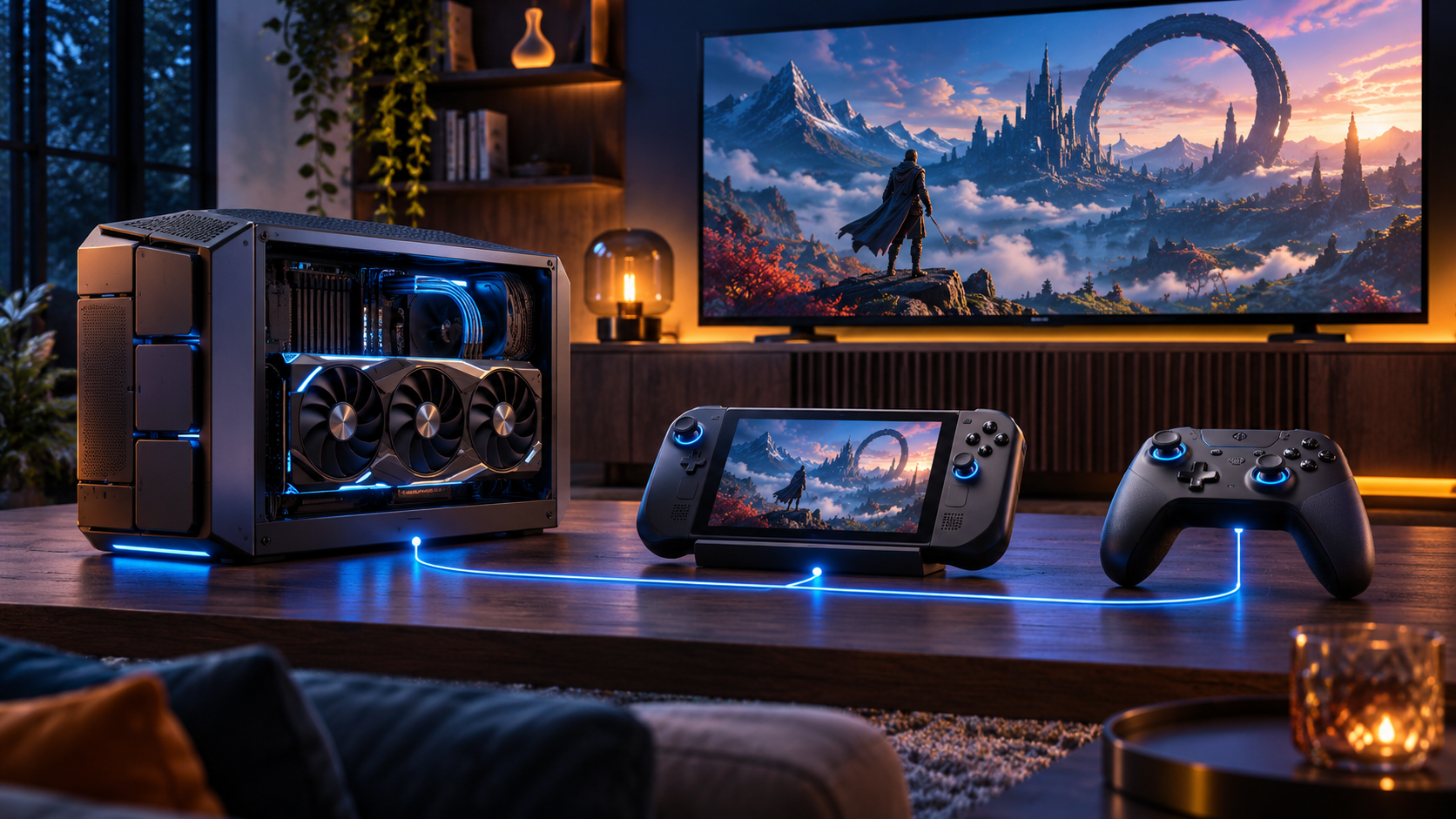
Imagine buying a gaming operating system license instead of a fixed console. Pick a handheld, a living-room PC, or components you can upgrade. Hardware partners build the machines; Microsoft provides the interface, services, and a certification program.
Microsoft could license an “Xbox OS Approved” designation to hardware makers whose systems meet its requirements. A manufacturer could sell a certified handheld or living-room PC, while someone building their own machine could choose approved components. Microsoft could set standards for drivers, controllers, performance, and updates, giving players and developers a clearer idea of what should work. How the program would handle fees, upgrades, and support would still need to be worked out.
Some of that world already exists. The ROG Xbox Ally, built with ASUS and AMD, offers an Xbox experience on a Windows handheld and supports other PC storefronts. The leap we're imagining is further: a standalone, licensed Xbox operating system that you could install or buy across a wider range of machines. Microsoft has not announced the model described here.
It would have to solve hard problems: compatibility with existing Xbox games, hardware variation, anti-cheat, licensing, support, and the simple question of who makes money when a player buys a game from somebody else's store. Microsoft would not automatically collect a fee on every Steam transaction.
How would an Xbox platform work?
Compare today’s devices with the more ambitious idea in this article.
Microsoft has not announced a Valve acquisition. Hypothetical outcomes are not predictions.
SteamOS could be a missing piece
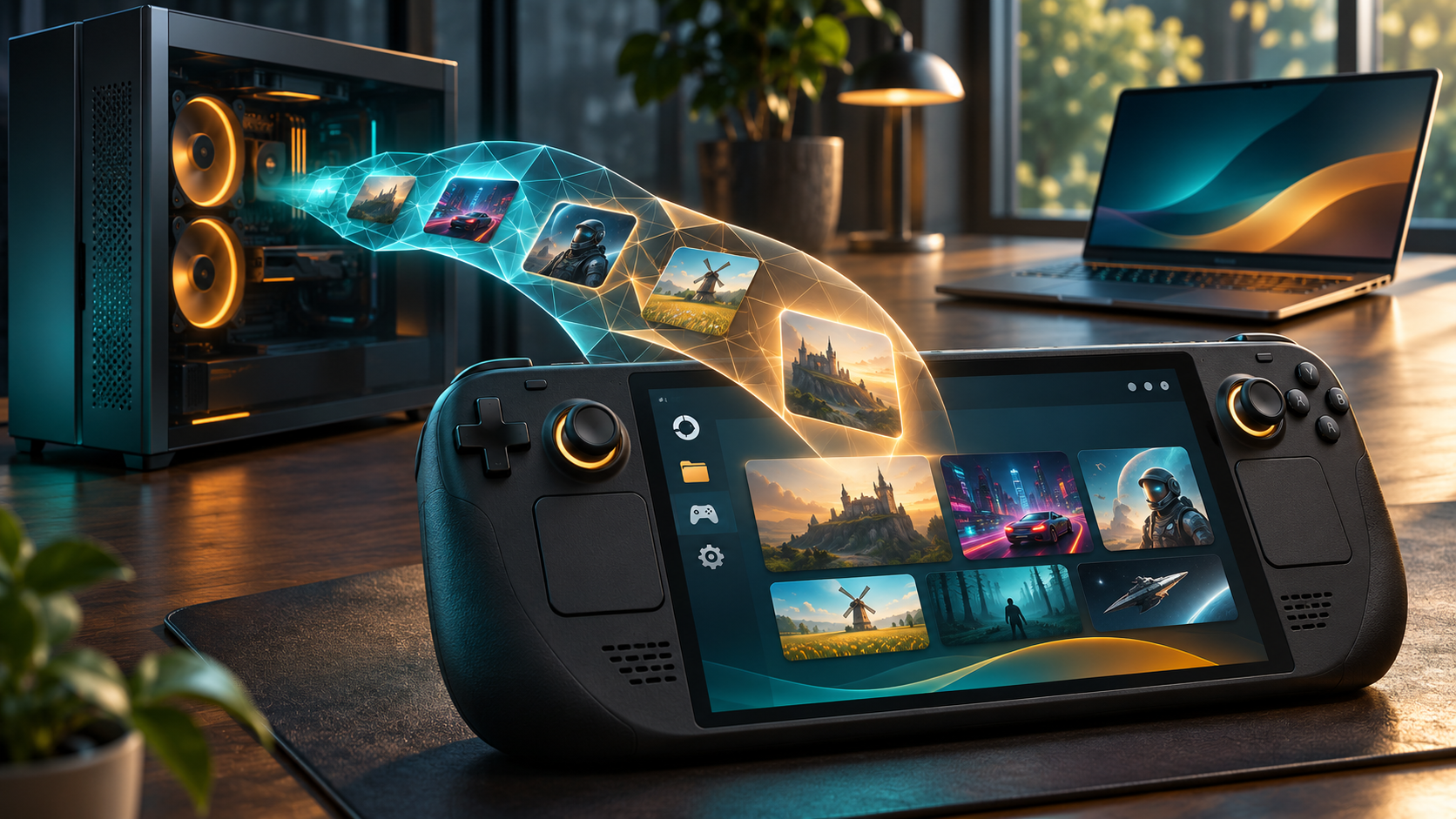
Valve's SteamOS is based on Linux. Proton helps many Windows games run on it, and Valve works with hardware partners on devices that use SteamOS. The base operating-system components are open source, while the Steam client and some drivers are proprietary. Valve explains the distinction in its SteamOS FAQ.
That doesn't make every game compatible. Valve's developer documentation notes that some anti-cheat systems need specific support and kernel-level solutions are not currently supported in Proton. Existing Xbox console games and Windows PC games also aren't automatically interchangeable.
If Microsoft owned Valve, it could invest in this work and potentially bring Linux gaming to more devices. That is an imagined choice, not a roadmap. Microsoft might instead prioritize Windows, integrate selected technology, or leave SteamOS largely alone.
Linux could win while competition loses
More devices running Linux would be exciting. But the openness of an operating system and the independence of the company controlling a major storefront are different questions.
Imagine Steam remains available but increasingly nudges players toward Xbox subscriptions, exclusive bundles, or Microsoft's preferred services. Or imagine the opposite: Microsoft funds Proton, keeps competing storefronts welcome, and lets Steam continue to make decisions independently. The outcome would depend on incentives, governance, and commitments—not the acquisition headline alone.
A deal of that scale could draw competition scrutiny. Whether it would be allowed, and on what terms, would depend on evidence and regulators. We can't predict their decision.
What about Mac players?
Mac users could benefit if a combined company invested in cross-platform releases and storefront support. They could also be steered toward cloud play while fewer games receive native Mac versions. Those are competing possibilities, not forecasts. Existing game libraries, publisher decisions, hardware compatibility, and business incentives would all matter.
Microsoft's biggest enemy might be Microsoft
The company would have the resources to make an ambitious plan real. It would also have competing teams, quarterly targets, and incentives to tie customers more tightly to its services. Those pressures could chip away at the very independence that makes Steam valuable.
My answer to the hypothetical isn't that Microsoft would inevitably ruin Steam—or that it would save gaming. The opportunity is a more flexible way to play. The risk is handing another piece of the gaming ecosystem to a company that already has enormous influence over it.
The question I'd ask isn't whether Steam's name survives. It's whether players can still choose where to buy, what hardware to use, and which services to trust.
What if Microsoft did it without buying Valve?
Here's the twist: Microsoft doesn't need to buy Valve to try a version of this idea. It already has gaming studios, a subscription service, cloud infrastructure, hardware partners, and experience building operating systems. It could pursue an open, Xbox-like gaming platform while Steam remains independent—and Steam could be one of several stores players choose to use.
Imagine downloading Xbox OS for free onto an approved PC or buying a certified device with it already installed. You could use the system to play compatible games you've bought from participating stores. Microsoft could charge a recurring service fee for access to a selected library of Xbox games, including games available exclusively through that ecosystem. Players might also have the option to buy individual games outright. That is one possible model, not an announced product, price, or promise about future game rights.
Microsoft already has pieces of the access model: Xbox Play Anywhere lets players buy supported digital games once and play them on Xbox, Windows PCs, and supported handhelds. Game Pass offers access to a changing game library under its applicable plan. A free, separately installable Xbox OS with the terms described here would go further.
Could a bigger platform attract more exclusive games?
That's where the idea gets interesting. If the operating system reached people who never bought an Xbox console, developers could reach a larger potential audience without requiring everyone to purchase the same hardware. Microsoft could use that audience, subscription revenue, development funding, or publishing partnerships to attract studios and make new games. Some agreements might include exclusive releases; others might not.
The opportunity is a possible cycle: more devices could bring more players; more players could make the platform more attractive to game creators; more compelling games could bring in more players. None of that happens automatically. Developers need a workable business case, games take years to build, and exclusivity deals can narrow player choice even when they strengthen a platform.
I'd love to see that idea reach Apple silicon Macs, too. Imagine choosing between macOS for work and a future Xbox OS for games when you start your Mac. That's a hypothetical, not a feature Microsoft has announced. Mac gaming isn't limited to decade-old games: Assassin's Creed Shadows came to Mac in 2025, and Cyberpunk 2077 arrived on Apple silicon that year. But the games I want aren't always available natively; for example, Helldivers 2 lists Windows requirements on Steam. A dual-boot Xbox system could offer another path to games that don't have Mac versions and bring more potential players to Microsoft's platform. Getting there would take real work: Apple silicon uses ARM, and a standalone Xbox OS would need compatible boot support and drivers, along with game compatibility or translation and publisher support. Apple's Boot Camp supports Intel Macs, not Apple silicon; the Asahi Linux project documents dual-booting Linux on Apple silicon, but that does not mean Xbox OS can run there. Today, Mac owners can already play supported Xbox games through Xbox Cloud Gaming in a browser, subject to its service and game availability. I'd like to see local play become another option.
What about SteamOS? Could Valve do this today? Not as a Valve-supported dual-boot installation on Apple silicon Macs. Valve's SteamOS installation guidance covers its own hardware and additional AMD-powered devices, not Apple silicon Macs. But the idea isn't pure science fiction. An unofficial experimental project describes a native SteamOS port for the MacBook Neo, while FX Steam Launcher describes running Valve's ARM SteamOS image in a virtual machine on Apple silicon. A virtual machine runs alongside macOS; it isn't the dual-boot setup imagined above. Both are community projects, not Valve-supported Mac products, and compatibility and hardware support vary. Separately, Fedora Asahi Remix can run Steam and some Windows games on supported Apple silicon Macs using Linux drivers, x86 emulation, and Windows compatibility tools. That's Linux gaming on a Mac, though, not an official SteamOS release.
So why hasn't Valve offered a supported Mac version? I haven't found a public explanation from Valve, so I won't pretend to know its business reasons. The technical work is clear enough: Apple silicon needs hardware-specific boot and graphics support, and many PC games need both Windows compatibility and translation from x86 instructions to ARM. Valve has built ARM support for its Steam Frame and describes using Proton and FEX together for Windows x86 games there. Getting that stack working reliably across Macs would be another project. Valve says it is broadening SteamOS hardware support; whether Mac support is a priority, and when it might arrive, remains unknown.
Xbox, PlayStation, and the exclusives problem
I've long thought Xbox struggled to give enough players a reason to choose its console over PlayStation. Its exclusives are part of that argument, though price, timing, regional availability, existing libraries, marketing, and hardware also matter. Calling Xbox “third” only makes sense once we say which market and period we're measuring; it's not proof that one issue alone explains the result.
Xbox needs games from outside its own studios, just as PlayStation does. Examples include Epic Games' Fortnite, Rockstar's Grand Theft Auto V, and Electronic Arts' EA SPORTS FC 26. They are available across platforms and aren't Xbox-owned exclusive franchises. Their value to Xbox doesn't mean we can quantify the company's dependence on each one from these sources.
Ownership and exclusivity are different. Microsoft owns Halo, Forza, and, following the Activision Blizzard acquisition, Call of Duty. But Halo: Campaign Evolved and Forza Horizon 5 are on PlayStation too. Call of Duty is now Microsoft-owned intellectual property, but it is not an Xbox-exclusive franchise. Meanwhile, Microsoft says Gears of War: E-Day is an Xbox console exclusive; it's also available on PC. Read Xbox's 2026 showcase announcement.
PlayStation has a recognizable lineup of its own: Astro Bot, God of War, Horizon, The Last of Us, and Ratchet & Clank are five examples of PlayStation-associated franchises or titles—not a total count. Some PlayStation titles are on PC, and some PlayStation-published games reach other consoles. Marvel characters such as Spider-Man are licensed properties, so a PlayStation-published game and a Sony-owned character are not the same thing. Explore PlayStation Studios' games and its PC releases.
There is a useful historical comparison, with a big caveat. In the Microsoft–Activision case, a federal appeals court in 2025 repeated a district court finding of roughly eight PlayStation exclusives for every Xbox exclusive. The finding reflects evidence from that earlier litigation; it is not a current count of first-party IP or a guarantee that the same ratio holds today. The court's discussion includes different forms of exclusivity, and platform availability keeps changing. Read the court opinion, page 9.
Stadia showed what convenience could feel like
I loved Google's Stadia. The idea of opening a game without buying a console, waiting for a giant download, or worrying about an upgrade felt like a glimpse of where gaming could go. I still wish Google hadn't canceled it.
Google said Stadia had not gained the traction it expected and ended access on January 18, 2023. It also announced refunds for eligible Stadia hardware, games, and add-ons. Read Google's shutdown announcement. The technology made convenience possible; the shutdown also showed how much players depend on the company keeping a service alive.
Streaming quality depends on connection, latency, location, and the game. Local downloads still matter, especially when an internet connection is unreliable or a service changes its terms. An access-first platform should make clear what happens when a subscription ends, games leave the catalog, or a service shuts down—and give players as much control over their purchases and saves as possible.
Maybe access really is the future: play on the device that suits you, buy or subscribe in the way that suits you, and let good games follow. Microsoft could build toward that future on its own. The challenge is making convenience durable enough that players, and the developers deciding where to build, trust it.
What if gaming had an X Station?
Let's take the idea a step further. What if the companies behind Xbox, PlayStation, Steam, and other platforms worked toward one shared place to find and play games? Call it X Station. Think of the fictional Weyland-Yutani corporation from the Alien universe as the inspiration for the mashup—then imagine the gaming version built around what players and developers actually need.
In this hypothetical, you could buy a game once and play it on any supported device you own, with your saves and friends coming along. A player who prefers a PlayStation, an Xbox, a gaming PC, or a handheld wouldn't have to buy another machine—or pay for another copy of the same game—just to join friends or follow a favorite series. People could still choose different devices for their features, price, or performance; the games and the people they play with wouldn't have to be trapped on one side.
For developers, a shared storefront or compatible set of storefronts could put their games in front of a broader audience. Players could discover a title without first asking which platform it belongs to, while studios could spend less effort navigating separate distribution rules if the companies agreed on common standards. That wouldn't make development effortless: devices still differ, games need testing and optimization, and publishers would need agreements about pricing, revenue, support, and which purchases carry over.
There's a catch, though. One company controlling the only store could set the fees, decide which games get seen, or change the rules for everyone. That's a rather Alien problem to create in the name of convenience. I'd rather see shared access, portable purchases and saves, cross-play, and fair ways to reach players alongside competing storefronts and hardware makers. Those benefits could come from cooperation and shared standards; the companies wouldn't necessarily have to merge.
X Station is a thought experiment, not an announced service. Still, it's a future worth asking for: let developers bring their games to the people who want them, and let players choose where and how they play.
Sources and further reading
This is an opinion piece built around an unconfirmed scenario. The linked sources document the technologies and products discussed; they do not substantiate a Microsoft–Valve acquisition. Facts and product availability should be checked again before publication.